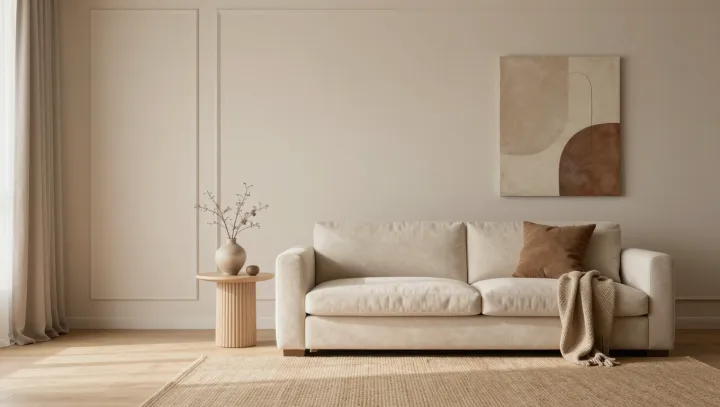
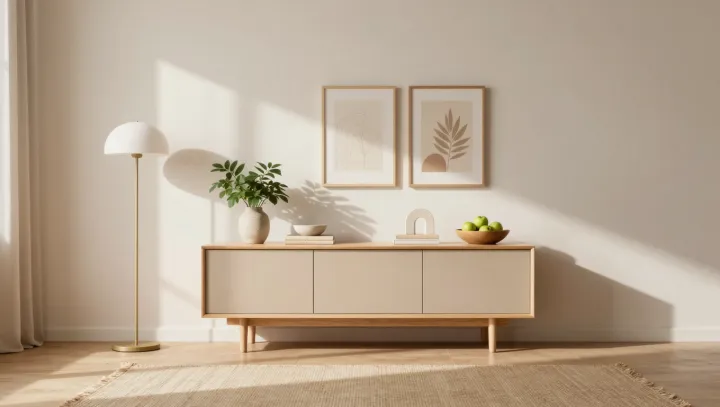
Calm in a living room is less a mood than a formula. One low sofa, an off-center rug, a lamp pushed slightly too far to the side: together they behave like a quiet equation, distributing weight across the room so the eye never stalls on a single dominant object yet never spins in chaos.
The paradox is blunt: the rooms that feel most effortless are almost never symmetrical. Perfect mirroring actually spikes cognitive load, because the brain’s pattern-recognition systems, driven by the ventral visual stream and Gestalt grouping, keep re-checking the match. Designers instead use a gallery-hanging logic: cluster a large artwork with two smaller pieces, offset a heavy armchair with a slender floor lamp, pair a dense bookcase with an expanse of bare wall. The ratios are closer to algebra than to whim, with mass, color saturation and negative space treated as variables to be solved.
What looks casual is usually calibrated. Eye-tracking studies show that people feel calmer when their gaze follows a slow, irregular path, so sofas and tables are often staggered to create a gentle visual zigzag rather than a rigid grid. Even cushions participate in this quiet math: three on one side of the sofa, one on the other, backed by a single plant that anchors the whole composition like a punctuation mark at the edge of a sentence.