
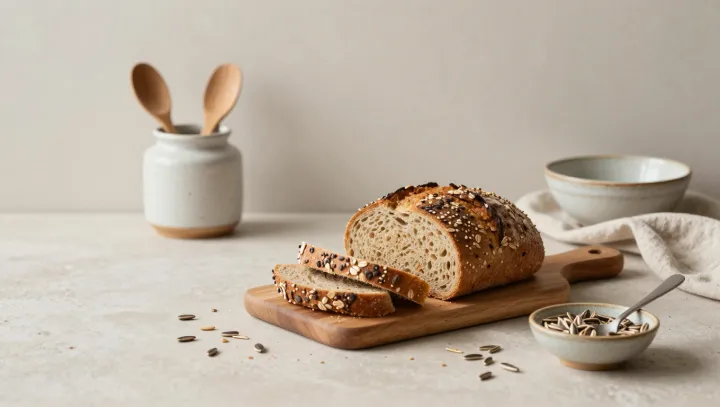
That rugged, seed-armored loaf on the counter can behave like a sugar bomb. Color misleads. Structure rules. When flour is finely milled, even from whole grain, pancreatic amylase can attack starch granules quickly, driving a rapid rise in postprandial glucose and insulin.
True whole-grain bread, built from intact kernels with unbroken bran and germ, tells a different metabolic story, because the physical barrier of the bran slows gastric emptying and limits the surface area exposed to digestive enzymes, flattening the glycemic index in a way a dark crust alone never can.
The popular compromise loaf, studded with seeds but built on pulverized grain, offers texture without real metabolic protection, since added seeds do little to alter starch gelatinization or glucose absorption when the underlying crumb is essentially a compacted starch sponge.
What matters is not marketing language but food architecture, so a consumer who wants that slow-release glucose drip must look for breads where whole kernels remain visible and intact, or formulations based on cracked rather than fully milled grain, or risk paying a premium for brown-tinted white bread.